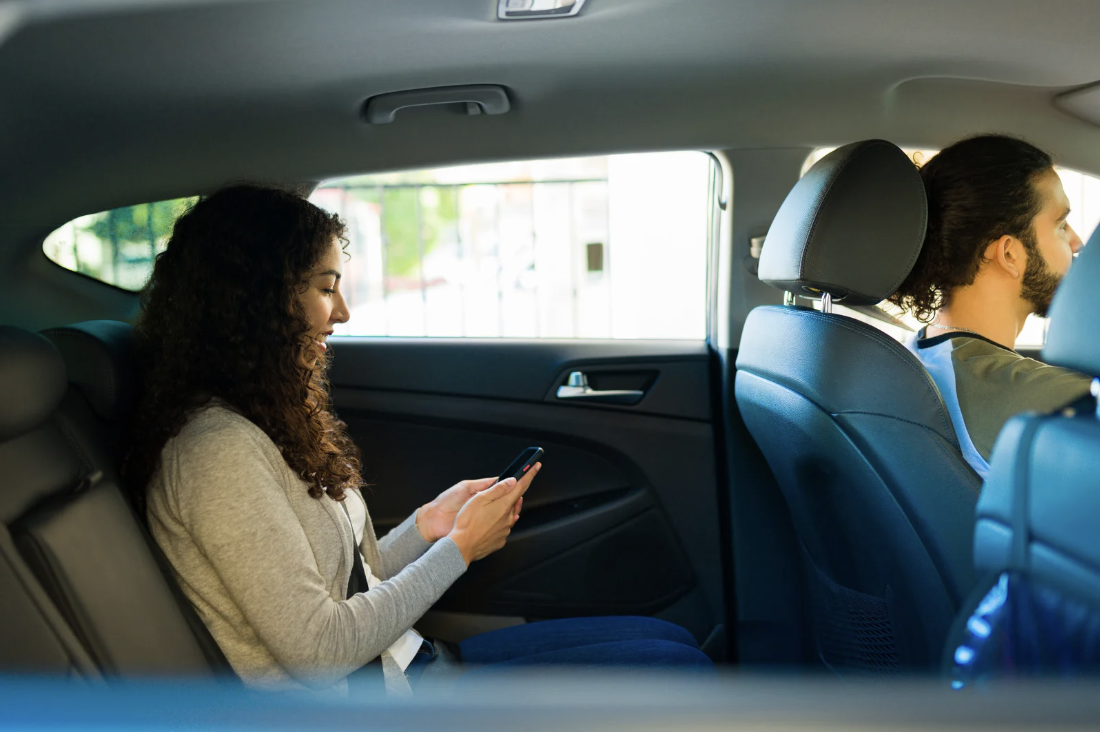
If you were just in a crash involving an Uber or Lyft in Portland, the first thing to know is that the insurance picture is more complicated than a normal two-car collision — and the rules turn on something most people don’t think about: what the rideshare driver’s app was doing at the exact moment of impact.
I’m Dr. Mike Kam, owner of Crash Care Clinics. Our entire practice is built around treating people after car crashes, including rideshare crashes. We see the confusion this creates almost every week — patients who don’t know whose insurance is supposed to pay, drivers who think their personal policy will cover them, passengers who never even thought about the question until they were sitting in the back of an ambulance. This guide is meant to give you the short, honest version, then enough detail to actually act on it.
The 30-second answer
- If you were a passenger in an Uber or Lyft that crashed in Portland, the rideshare company’s commercial policy almost always applies. That policy carries up to $1 million in coverage, plus another $1 million in uninsured/underinsured motorist coverage if the at-fault driver doesn’t have enough insurance.
- If you were in another car that was hit by an Uber or Lyft driver, the coverage that pays you depends on what the rideshare app was showing when the crash happened — whether the driver was waiting for a ride, on the way to a pickup, or had a passenger.
- No matter who was at fault, if you have your own Oregon auto policy, your PIP (Personal Injury Protection) — minimum $15,000 in medical bills with a 2-year window — is the first money that pays for your treatment. PIP applies whether you were the rideshare passenger, the other driver, or even a pedestrian.
The rest of this guide unpacks each of those, plus the practical steps that protect your claim in the first 72 hours.
Why rideshare crashes work differently
A normal two-car crash has a simple insurance story: the at-fault driver’s liability covers the other car. Add a rideshare and the story changes, because Uber and Lyft drivers occupy three different insurance “states” depending on what their app is doing.
This isn’t trivia. It’s the entire reason rideshare claims get denied or short-paid: the insurance picture for any given moment depends on whether the driver’s app was on, whether they had been matched with a rider, and whether the rider was in the car. Portland city code spells this out explicitly under Portland Code 16.40.230.
The three periods (Portland-specific dollar amounts)
Here are the periods, with the actual coverage amounts required of every Transportation Network Company (TNC) operating in Portland.
Period 1: app on, waiting for a ride
The driver has the Uber or Lyft app open and is logged in, but hasn’t been matched with a passenger yet.
- Required liability coverage: $50,000 per person / $100,000 per incident for bodily injury, plus $25,000 for property damage.
- This is on top of the driver’s own state-required compulsory coverage.
In practice, Period 1 is the most contested. The driver’s personal auto policy will usually deny coverage because the car was being used for commercial purposes, and the rideshare company’s coverage limits are lower than they will be in the next two periods. If you were hit in another car by a rideshare driver who was in Period 1, expect a coverage fight — get a copy of the in-app trip log if you can.
Period 2: matched and en route to pickup
The driver has accepted a ride request and is driving toward the rider.
- Required coverage: $1 million combined single limit (death, personal injury, property damage).
- Plus $1 million combined single limit in uninsured/underinsured motorist coverage.
Period 3: passenger in the vehicle
The rider is in the car, from pickup until destination.
- Required coverage: Same as Period 2 — $1 million combined single limit, plus $1 million UM/UIM.
The practical takeaway: from the moment a ride is accepted (Period 2) until the rider is dropped off (Period 3), the rideshare company is on the hook for serious coverage. That’s why proving the app status at the time of impact matters so much — and why the in-app crash report (covered below) is one of the most important things you can do at the scene.
Who you were in the crash changes what you do
The next section depends on which of three scenarios applies to you.
Scenario 1: You were a passenger in an Uber or Lyft
This is the cleanest scenario, insurance-wise. By definition you’re in Period 3, so the rideshare company’s $1 million policy applies. Your steps:
- Get medical attention if anything hurts, even mildly. Adrenaline masks injury for 24-72 hours — see our delayed pain guide for what to watch for.
- Open the app and report the crash before you get out of the car if you can. In Uber, that’s the blue shield (“Safety Toolkit”) at the bottom-left of the trip screen. In Lyft, the equivalent is the “Get Help” or “Safety” menu inside Ride Details. This creates a timestamped record that you were a passenger when the crash occurred — it is the single most useful piece of evidence for your eventual claim.
- Photograph the scene, the cars, and the in-app trip details (driver name, license plate, time).
- Get the police report number. If the crash caused any injury or more than $2,500 in damage, Oregon law also requires you to file a DMV Form 735-32 within 72 hours.
- File a claim with the rideshare company’s insurer, not your own auto carrier first. The rideshare policy is primary in Period 3.
- Use your own PIP for medical bills. Your Oregon auto policy’s PIP pays for your treatment up front, no fault required, even though you were a passenger. Your insurer then recovers from the rideshare carrier through subrogation. If you don’t have your own auto policy, the rideshare’s policy includes med-pay for passengers — but PIP is faster and easier.
Scenario 2: You were in another car hit by an Uber or Lyft driver
This is where the period system matters most. Your steps:
- Same first three steps as scenario 1 (medical, scene documentation, police report / DMV form).
- Find out the driver’s app status. Ask the driver directly, take a photo of their driver app screen if they’ll let you, and note whether they had a passenger. The police report should also note this.
- Use your own PIP first. It pays your medical bills regardless of fault.
- Make a liability claim against the right policy. If the driver was in Period 2 or 3, the $1 million rideshare policy applies. If they were in Period 1, you’re stuck with the lower limits ($50K/$100K/$25K) and the rideshare insurer may try to push the driver’s personal carrier first. If they were not logged into the app at all, it’s a normal auto claim against their personal policy.
If you were seriously injured or the driver was in Period 1, get an attorney involved early. The coverage layering is exactly the kind of dispute insurers use to delay or reduce payment.
Scenario 3: You’re an Uber or Lyft driver
Two truths to know up front: your personal auto policy almost certainly excludes commercial use unless you’ve added a rideshare endorsement, and the rideshare company’s coverage levels change by period as described above. After a crash:
- Same first three steps (medical, scene, police report / DMV form).
- Report the crash through your driver app (the blue shield in Uber, “Get Help” in Lyft). This locks in the app-status timestamp and starts the rideshare insurer’s claim process.
- Notify your personal auto carrier, but expect them to deny anything beyond Period 1 because you were on the clock.
- Use Oregon PIP for your own medical care. Whether your PIP comes from your personal auto policy (if you carry it) or from the rideshare company’s policy (which includes PIP for the driver under Oregon HB 2393, effective 2022), $15,000 in no-fault medical coverage is available to you.
- If injuries are significant or there’s any dispute about which period you were in, talk to an attorney before giving a recorded statement to anyone.
How Oregon PIP works with rideshare
This is the part most people miss, so I’ll be specific.
Oregon law (HB 2393, effective January 1, 2022) requires every transportation network company operating in Oregon to provide PIP coverage to its drivers. That means there is now PIP coverage available in any rideshare crash:
- The rideshare company’s policy carries PIP for the driver during Period 1, 2, and 3.
- If you were a passenger, your own Oregon PIP applies first.
- If you were a passenger and don’t have your own auto insurance, the rideshare’s PIP covers you.
- If you were in another car that was hit, your own Oregon PIP applies first regardless of whose fault it was.
Oregon’s PIP minimum is $15,000 per person with a 2-year coverage window from the date of the crash (ORS 742.524). It pays for: medical bills (chiropractic, PT, imaging, ER visits), wage loss up to $3,000/month for up to 52 weeks, and essential services. Using PIP does not raise your rates if you weren’t at fault — see our Oregon PIP guide for the full breakdown.
The practical effect: if you were hurt in a Portland Uber or Lyft crash, you almost always have at least one — and usually two or three — PIP sources stacked. Most patients we see in this situation never pay a dollar out of pocket for their care.
What to do in the first 72 hours
The full sequence is in our 8 Steps After a Car Accident in Oregon cornerstone, but the rideshare-specific version is:
- Get checked. ER if there are red flags (loss of consciousness, severe headache, chest pain, numbness, abdominal pain). Otherwise, see a chiropractor or urgent care within 72 hours. Soft-tissue inflammation peaks 24-72 hours post-impact, and the documentation gap if you wait longer can hurt your eventual claim.
- Report in-app. Both Uber and Lyft have crash reporting built into the rider and driver apps. This timestamps your status and creates a record for the insurer.
- File the DMV report. Oregon Form 735-32 is required within 72 hours for any crash involving injury or property damage over $2,500. You can file it online with ODOT.
- Open a PIP claim with your own auto carrier (if you have one). This is the fastest way to get medical bills paid.
- Keep a symptom log. Pain level 0-10, what triggers it, what you can’t do because of it. Daily entries for the first two weeks. We give every patient a template — settlements track documentation quality.
- Don’t give a recorded statement to the rideshare company’s insurer or any other adjuster until you’ve at least talked to an attorney, especially if injuries are significant.
When you need a personal injury attorney
Most rideshare cases benefit from at least a free consultation with an attorney, because the multi-policy layering creates more opportunity for insurers to delay or short-pay. Specific triggers that mean you should call sooner:
- The crash put you in the hospital or you needed imaging to rule out fractures.
- The rideshare driver was in Period 1 (waiting for a ride) and there’s a coverage dispute.
- The at-fault driver was uninsured or underinsured (UM/UIM claims are technical and adjuster-friendly when handled solo).
- You’re being asked to give a recorded statement.
- You’re being asked to sign a release or accept a quick settlement in the first few weeks.
We work with several Portland personal injury attorneys regularly and can refer you to one if it would help. We don’t charge for the referral, and the attorneys we recommend work on contingency — no fee unless they recover for you.
How we handle rideshare patients at Crash Care Clinics
A few things to know about how this works at our clinic:
- No money out of pocket. We bill PIP directly. You don’t write a check at the front desk.
- We coordinate with attorneys. If you have a personal injury attorney (or get one), we send them clinical updates and final reports without you having to play middleman.
- We document for the claim, not just for treatment. Our notes are written knowing they’ll be read by an insurance adjuster — which means the eventual settlement evaluation has the clinical support it needs.
- We see same-day or next-day for new auto-injury patients. The 72-hour window matters and we don’t make people wait.
If you’ve been in a Portland Uber or Lyft crash, book your first visit or call us. The first appointment is a thorough exam and treatment plan — not a sales pitch.
Who pays for my medical bills if I was a passenger in an Uber crash in Portland? Your own Oregon PIP pays first if you have an auto policy — minimum $15,000 in medical coverage with a 2-year window, no fault required. If you don’t have your own auto policy, the rideshare company’s policy includes medical coverage for passengers. The rideshare company’s $1 million liability policy typically pays for the eventual settlement of pain and suffering, lost wages beyond what PIP covers, and any medical bills exceeding PIP limits.
Does Oregon PIP cover Uber and Lyft drivers? Yes. As of January 1, 2022, Oregon House Bill 2393 requires every rideshare company operating in Oregon to provide PIP coverage to its drivers — minimum $15,000 in medical bills, with the same 2-year coverage window as a personal auto policy. This applies whether the driver is in Period 1, 2, or 3.
What is the $1 million Uber/Lyft policy and when does it apply? Portland city code 16.40.230 requires every Transportation Network Company to maintain a $1 million combined single limit liability policy that applies during Periods 2 and 3 — from the moment a driver accepts a ride request until the passenger is dropped off. There is also a separate $1 million in uninsured/underinsured motorist coverage during those periods.
What if the Uber or Lyft driver was just waiting for a ride when they hit me? That’s Period 1. The rideshare company is required to carry $50,000 per person / $100,000 per incident in bodily injury liability and $25,000 in property damage during this period. The driver’s personal auto policy will usually deny the claim because they were operating commercially. Your own PIP still applies for your medical bills, and your UM/UIM may need to fill the gap if injuries exceed the Period 1 limits.
How do I prove the rideshare app status at the time of the crash? Three sources: ask the driver to show you their driver app screen (and photograph it if they will), report the crash through your own app immediately (which timestamps your status as a passenger), and request the trip records from Uber or Lyft as part of the claim. The police report should also document app status. An attorney can subpoena the records if there’s a dispute.
Should I file with my own insurance or the rideshare company first? Open a PIP claim with your own auto carrier first — it’s the fastest way to get medical bills paid. Then file the liability claim with the rideshare company’s insurer (or the at-fault driver’s insurer if they weren’t the rideshare driver). Your insurer recovers from the at-fault carrier later through subrogation; you don’t have to coordinate that.
- Portland City Code 16.40.230 — TNC Insurance Requirements
- Oregon DFR — Insurance in a sharing economy
- OPB — Ride-hailing companies must provide insurance coverage for Oregon drivers and passengers (HB 2393)
- ORS 742.524 — Personal Injury Protection benefits
- Uber — What to do in a crash
- Oregon DMV — Crash Reporting (Form 735-32)


Leave a Reply